Sunday, June 18, 2017

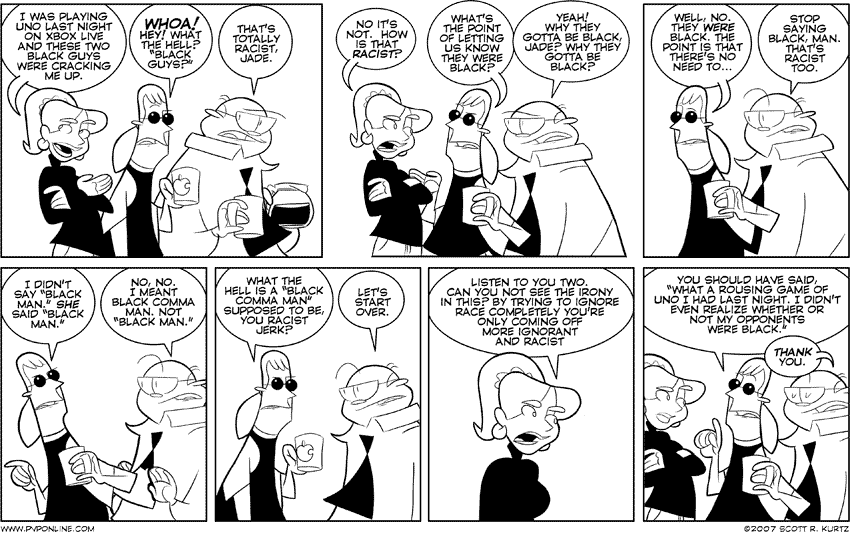
My reaction to "Colorblindness is the New Racism"

befunky_colorblindideology.jpg (700×700) 
     In "Colorblindness is the New Racism," Margalynne J. Armstrong and Stephanie M. Wildman argue that color insight rather than colorblindness needs to be our approach to thinking about race. They strongly agree with Allan G. Johnson about the elephant in the room regarding discussing race and that we need to use the vocabulary even if it is difficult and uncomfortable.  For too long whites have ignored the fact that they are white and their whiteness gives them privilege.  Even white who describe themselves as not prejudice can't show an understanding of privilege if they don't or won't see the oppression of blacks.  The authors state "The emphasis of discrimination alone, as if existed in a vacuum, obscures the operation of privilege, thus aiding in its perpetuation.  In order to change the societies perspective and the continuance of these discriminatory ways we need to encourage others to think and talk about the realities of privilege and oppression.


     According to Armstrong and Wildman "Color Insight does not provide a magic wand that dispenses with racism, but it does offer a vocabulary and some significant points of entry for deeper conversations". (p.76)  Color insight is the exact opposite of colorblindness.  Believing colorblindness would promote equality, many whites felt this showed they were not prejudice but it just showed the failure to recognize their own white privilege.  This colorblindness continues the "centuries of racism and white privilege". (p.66)  The authors go on to explain "Society cannot battle a phantom that in cannot recognize and name."  (p. 67)  As Johnson discussed, as hard as it is to use the words and talk about racism or any other of the -isms for that matter, it must be done if we want it to change.  He explained "So instead of talking about racism and sexism that plague people's lives, people talk about "diversity" and "tolerance" and "appreciating difference".  (Johnson p.12)  These  are positive words and trying to put a different spin on the problems at hand.  We need to get people talking about these problems using the uncomfortable language needed to change it.  Color insight needs to replace colorblindness to move things forward.  "Color insight requires practitioners to observe, discuss, and analyze the operation of race and privilege in contemporary society".  In order to participate, one must recognize privilege and oppression and have and understanding of societies ideas regarding privilege.

     The classroom is an important place to discuss racial inequality and privilege versus oppression.  Providing instances to observe racialization in the "real world".  In one assignment the authors suggest having students "notice the racial composition" of their environment for twenty-four hours.  "Through reading and discussing the observations,students learn a bit more about privilege".  I found it most interesting that after doing the previous exercise "students report that they notice more in the weeks following the exercise".  Their eyes were opened to something that previously went unnoticed.  Another powerful activity "inspired by the work of Kendall and Ansley, asks each student to consider themselves in relation to a power line that separates privileged and non-privileged categories".  Students looked at each different category and whether it fell above or below the line.  With each above the live some sort of privilege was attached.  In contrast, for each "below the line" attribute some privilege was removed or oppressed.  Both activities are provide impactful ways of getting students to examine a difficult subject and get the conversation started.  Awareness can be the first step in creating change.


"Black Lives Matter"
     As a white woman, who does not consider herself prejudice, I didn't understand why "All Lives Matter" was not a better alternative to not offend anybody.  In my mind, this was fair to Asians, Hispanics, Indians, Muslims, and any other non-white who may not be treated fairly based an their race or skin color.  Our society does send messages of "all lives matter" but the "black lives matter" really means black lives should matter as much as white lives or any other lives.  Black people continue to be oppressed in many ways and are not treated equally.  So instead of assuming the slogan meant "only black lives matter" people need to understand that without acknowledging "black lives matter" we are continuing to ignore the problem. (Roose)

     In Joey Salad's social experiment in the video clip he goes to a "white neighborhood" he's holding a "Black Lives Matter" sign.  Many of the white people who answer him do say they support it but they don't want blacks segregated into a group because "all lives matter".  The people do not really take offense or get angry with him even if they don't agree with him.  They don't care because they aren't affected.  They know their lives matter, because they live with white privilege every day.  However, when he goes to a "black neighborhood" with his "All Lives Matter" sign he is met with very hostile, negative results.  The black people take offense and take the message to mean white lives matter more.  They see it as negative because it isn't showing the injustice and inequality of "black lives" in this white privilege culture.  One man gets extremely upset to the point of using violence toward Joey.  The black people are more enraged because the "All Lives Matter" sign seems to negate their cause.  I wonder if the results would be any different if Joey was a black man standing in each neighborhood with the same signs? 

Thursday, June 15, 2017

Privilege Changes Everything

Privilege Changes Everything

As I read Allan Johnson's work "Privilege, Power, and Difference", I was struck by the idea that you need power and privilege to make a difference yet it's those without privilege and power that need the changes to happen in order to make a difference.  Many who live with privilege don't often see themselves as privileged and don't feel like they need to be part of the solution to break these barriers that others face.

Johnson states "Problems of and defensiveness apply not only to the language of race, but to an entire set of social differences that have become the basis for a great deal of trouble in the world."  (p. 2)  This statement really made me think about the issues surrounding race and racial inequality and how it can stir up deeply rooted emotions.  These emotions lead to defensiveness and can invoke physical violence or other negative situations such as rioting.  Our country has experienced so many non-peaceful events and tragedies due to the racial divide.  These violent racial situations have often led to more attacks and rioting.  The Rodney King case was mentioned in Johnson's article but similar incidents have occurred around the United States.  Trayvon Martin, a young black man was shot and killed by a white man who was part of a neighborhood watch group in Sanford, Florida setting off racial tension throughout the area.  In Missouri, a Ferguson a white police officer shot and killed Michael Brown, an unarmed black man and set off a series of violent protests.  Three months later, when the officer was found "not guilty" more protests erupted.  Even the elections of our two most recent presidents, Barrack Obama and Donald Trump, both stirred up the racial divides within our country.  This problem is epidemic and the social inequality continues to divide our country.

Another important point that Johnson addresses is that privileged groups need to be part of the solution.  The problem is that these people with privilege often don't see themselves as needing to be part of the solution.  They see racism as the black man's problem, feminism as a woman's problem, etc. but don't want to put themselves at risk for others.  People's perceptions and quick reaction of defensiveness over privilege is also part of the problem.  Treating others with decency and respect, and be accepting of our differences seems like it should be easily attainable, yet we know this is not the case.  Another part of this issue is that everyone's experience with privilege is based on someone else's lack of privilege. All of our lives are shaped by these privileges although we had little control over it.  A change in environment can change one's privilege.  This all reverts back to Johnson's reference to Rodney King's question "Can't we all just get along?"

Diversity is not the problem, it is how we use it that is the problem.  "The trouble is produced by a world organized in ways that encourage people to use difference to include or exclude, reward or punish, credit or discredit, elevate or oppress, value or devalue, leave alone or harass." (Johnson p.19)  This diversity is supposed to be a good thing along with "tolerance" and "appreciating differences" but it actually the avoidance of negativity and words like 'privilege","racism", "sexism", "classism', among others in discussing the causes of privilege and oppression.  The ability to gain privilege happens when you can prove yourself to belong to a certain category just as you can loose privilege if people think you don't belong to a certain category according to Johnson.  He also points out that people are labeled when it lowers their status such as "She's part Jewish", "woman doctor", or "black writer". (p. 34)  A final quote, which resonated with me was on page 40, "Just as privilege tends to open doors of opportunity, oppression tends to slam them shut."


via GIPHY

In his work "Privilege, Power, and Difference", Allan G. Johnson argues that privilege is something instilled in us based on what we learn from society.  Based on which categories you fit into based on other's perception can give or take away privilege. 


Monday, June 12, 2017

A Bit About Me

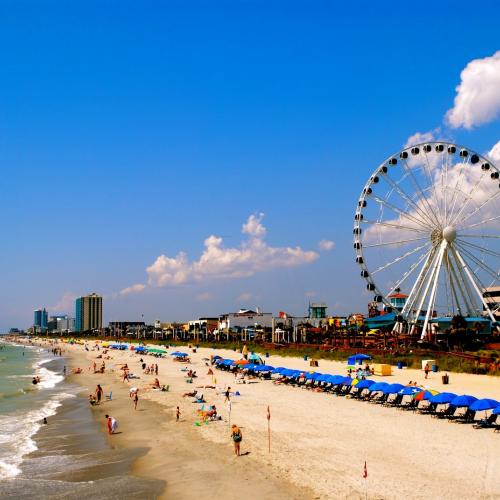
My name is Shena Tremblay. I am currently the school librarian at Calcutt Middle School in Central Falls, Rhode Island.  I am currently in the TESL Masters program at Rhode Island College, where I recently became ESL certified.  I am hopping to return to an elementary classroom next year.  I have been married to my husband Mark for 21 years.  We have two daughters that attend the University of R.I.  In my free time I enjoy bike riding, rollerblading, swimming, and skiing.  I am really looking forward to summer vacation and heading to Myrtle Beach, South Carolina for the first time.  My next vacation is going to be a cruise....so recommendations are welcome!